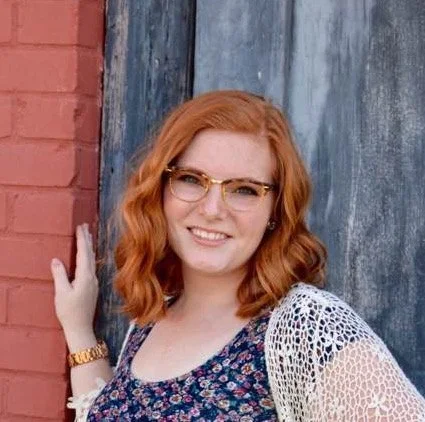
Hello, my name is Bailey Wells, and I am a M.S. Themed Experience student at the University of Central Florida and a May 2023 graduate of Murray State University. My undergraduate degree is in Design Engineering and Technology meaning I have studied Computer Aided Design encompassing product, production, component, stage, and assembly design — both small and large scale. I am a Certified SolidWorks Associate (CSWA).
Outside of class, I have had internships in HVAC (which developed into a contracting role with a full time offer after one month) and construction. I also work with my family doing ceramics and painting as well as many other creative ventures.
My ideal job would be in a field where I am able to express my creativity while also challenging myself intellectually. I want to create happiness.
A selection of work done between 2019-current.
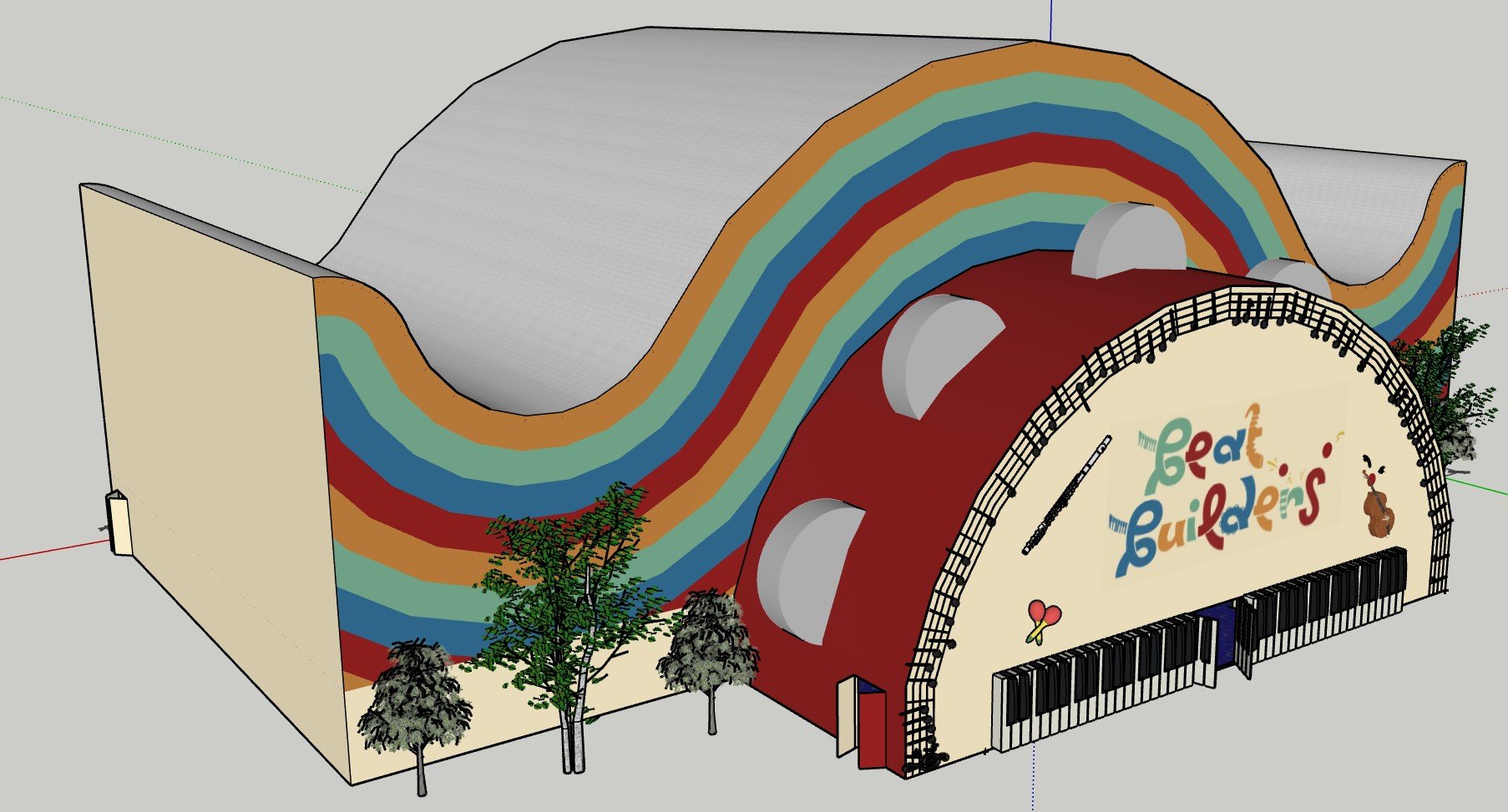
Beat Builders
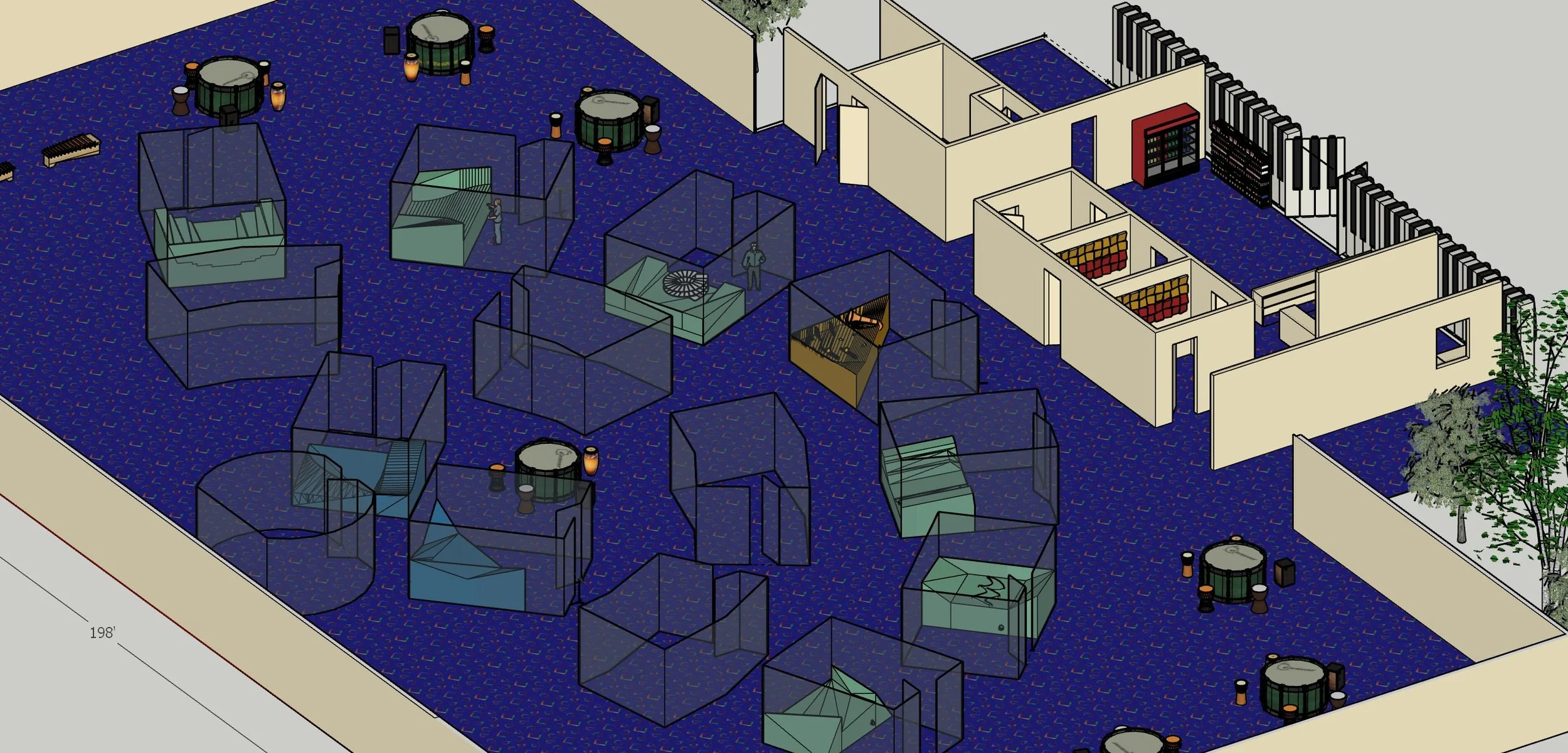
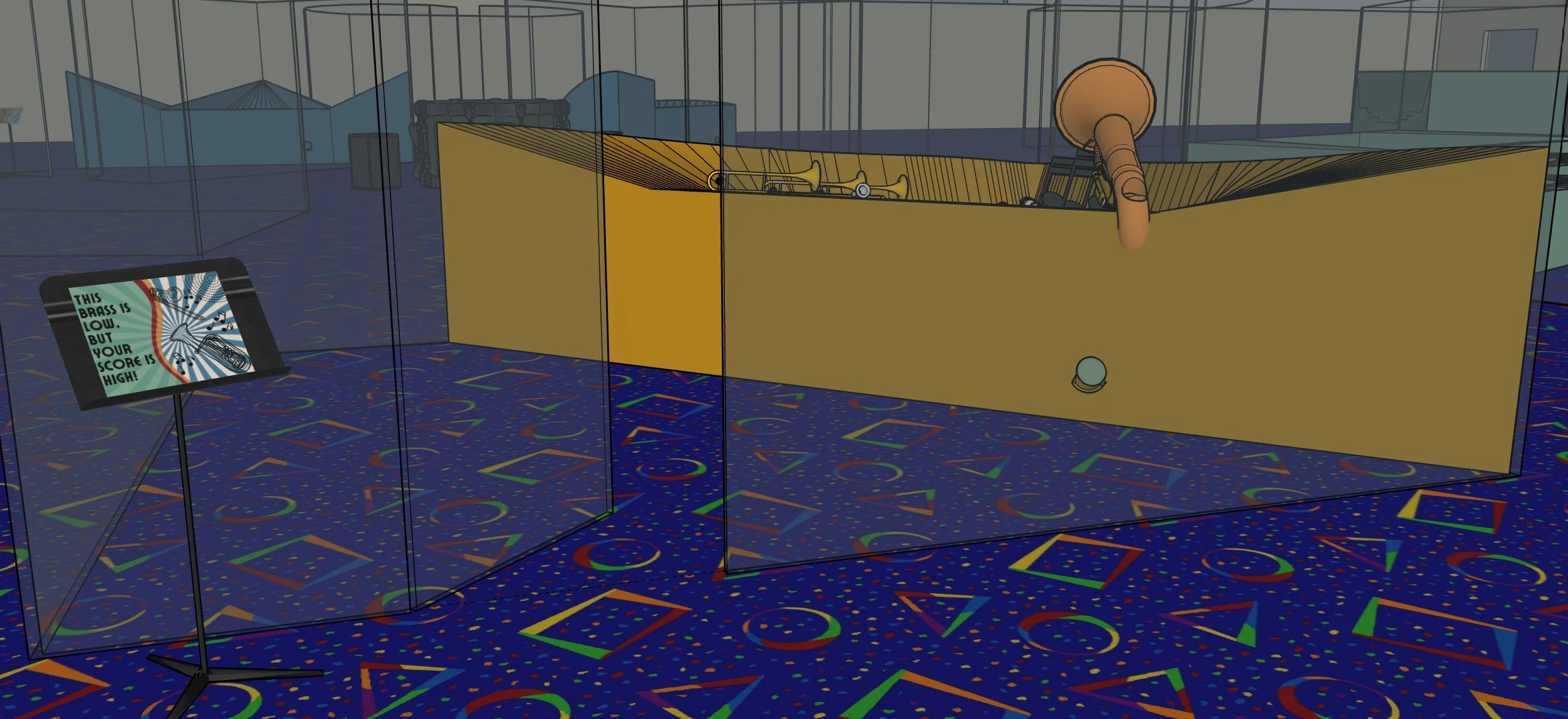
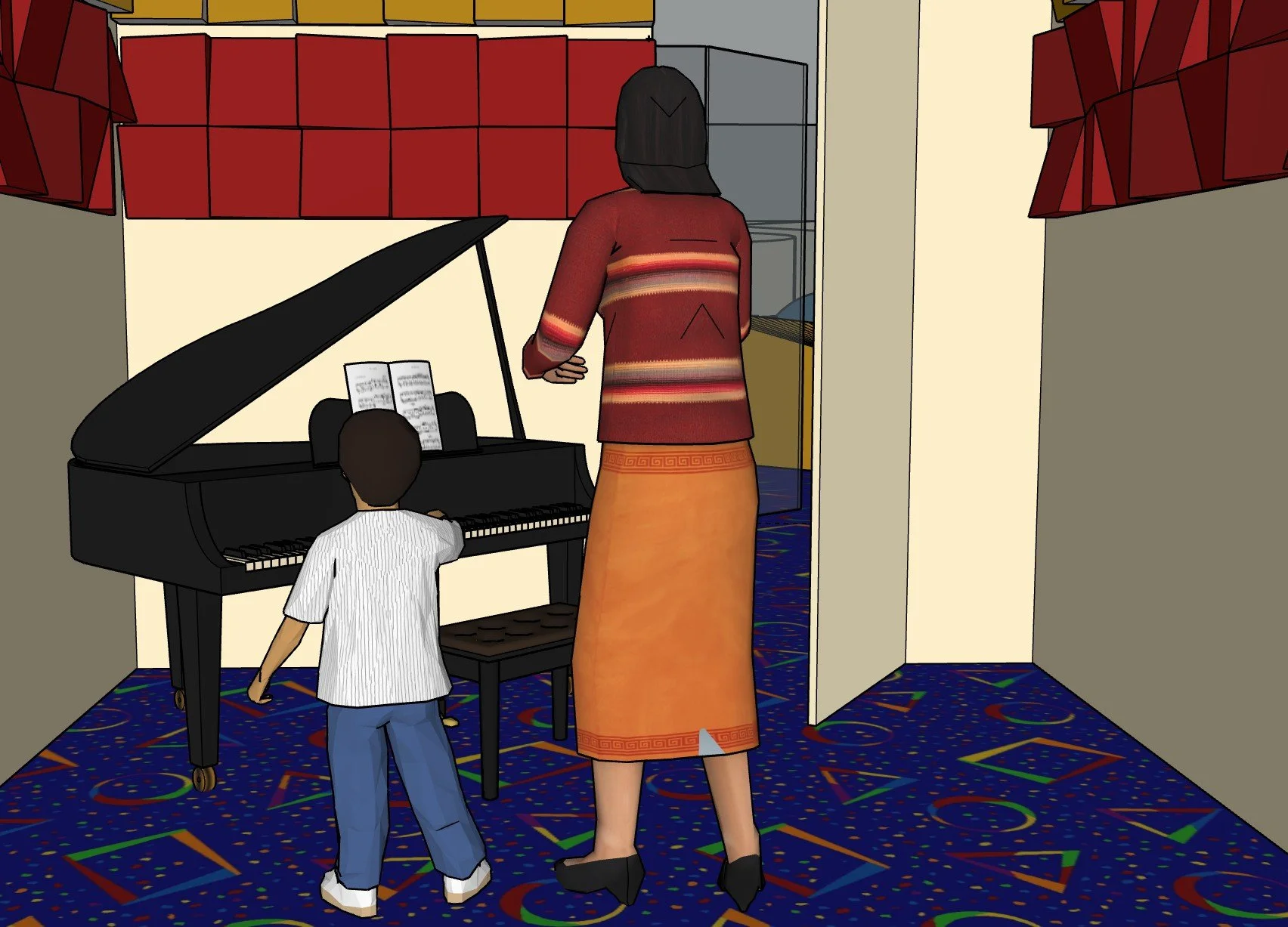
Become the Maestro of your own symphony when you step into the musical world of Beat Builders. Beat Builders is an edutainment offering designed to show how different instruments affect a score. Aspiring musicians start their game in the practice rooms learning the rules of the game and selecting the song they will be playing along to. Players then step onto the stage and go from hole to hole or instrument to instrument group striking different instruments and gaining points to determine the way their final melody sounds. What would it sound like to only have clarinets and trombones? What would it be like to have no percussion? Earn a perfect score to have a song worth listening to or do your best and hear something completely unique.
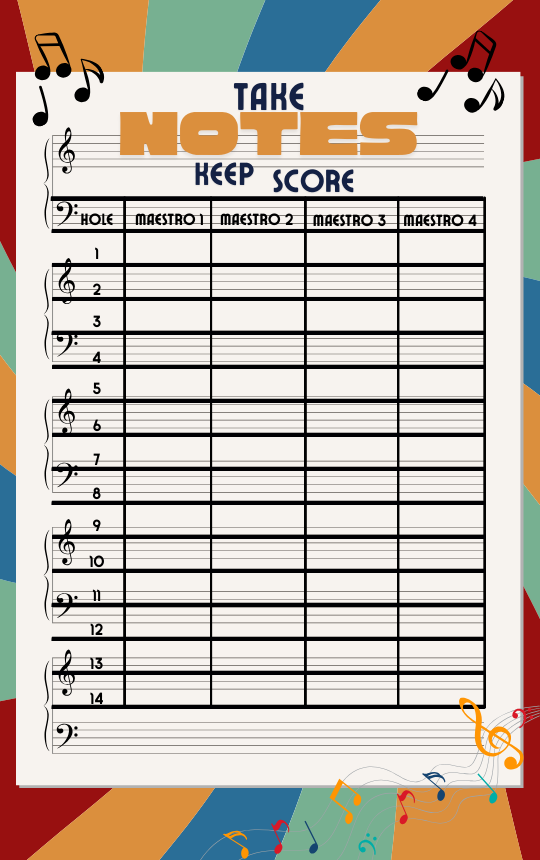
Score Card
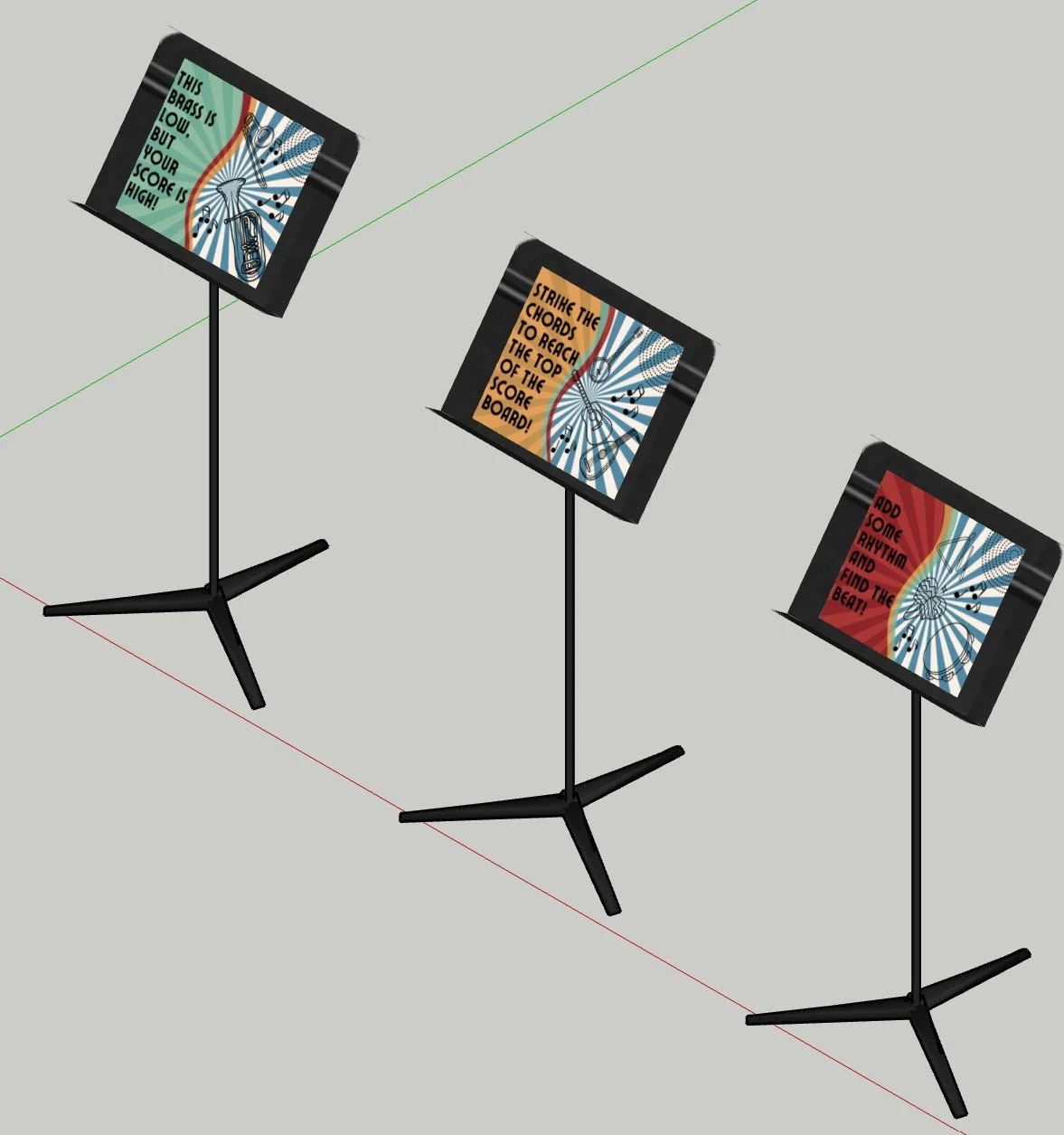
Room Signs
Practice Room
The Phantom’s Sip-phony
Based on Gaston Leroux’s 1909 novel The Phantom of the Opera with artistic inspiration from the 1925 silent film adaptation, The Phantom of the Opera by Universal.
A young apprentice to Joseph Buquet (chief stagehand of the Paris Opera House) spent his time learning the stagehand trade keeping the show moving and beautiful. Once the shows were over for the night he became everyone’s favorite “barman” crafting classic French cocktails and beautiful show-inspired sips with his synesthetic skills.
After the unfortunate passing of his mentor, Joseph Buquet, the young apprentice decided the Paris Opera was too hazardous a place to work so long as the Phantom was around and decided to set off making drinks on a stage all his own sharing his unique ability to craft contemporary cocktails based on sound alone
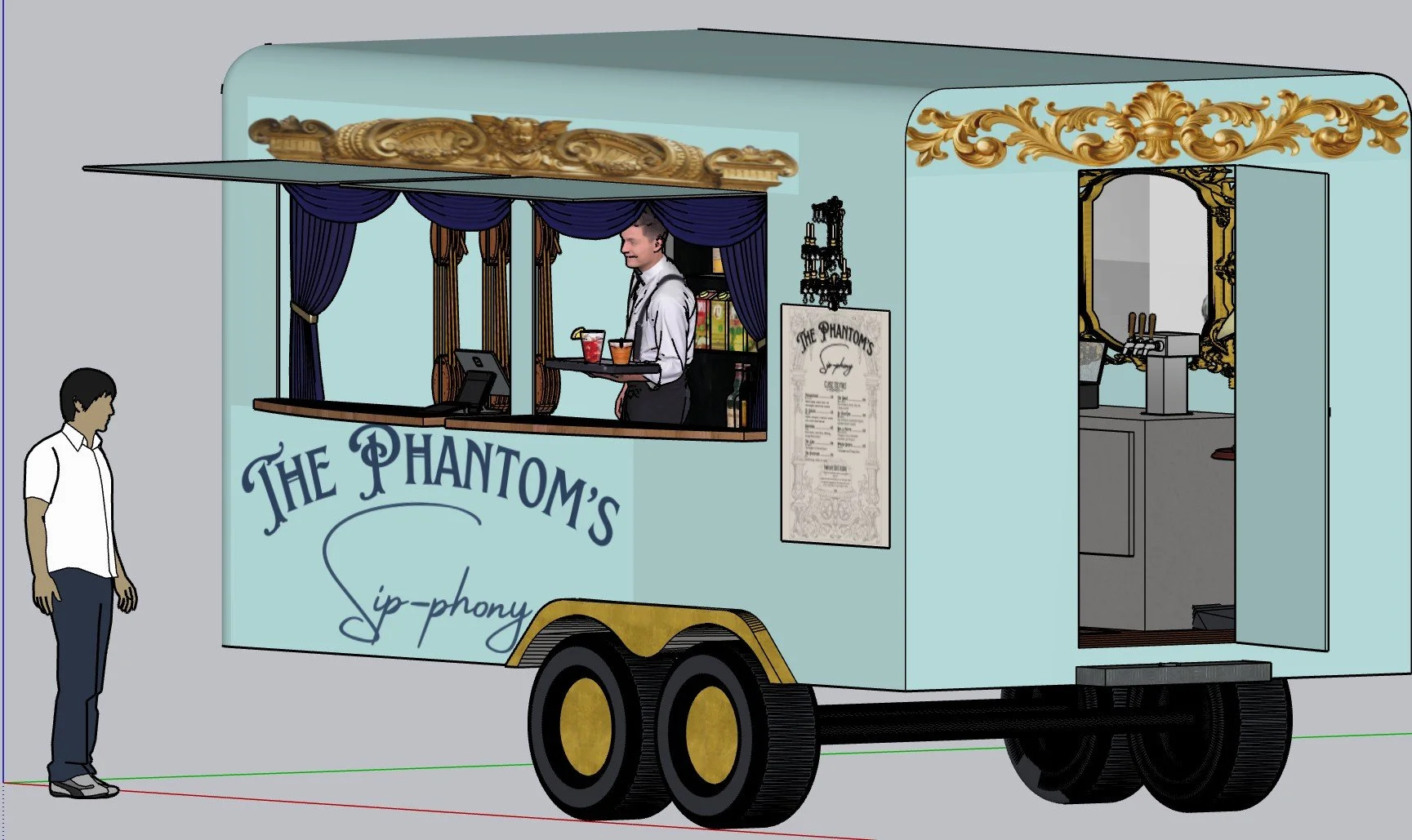
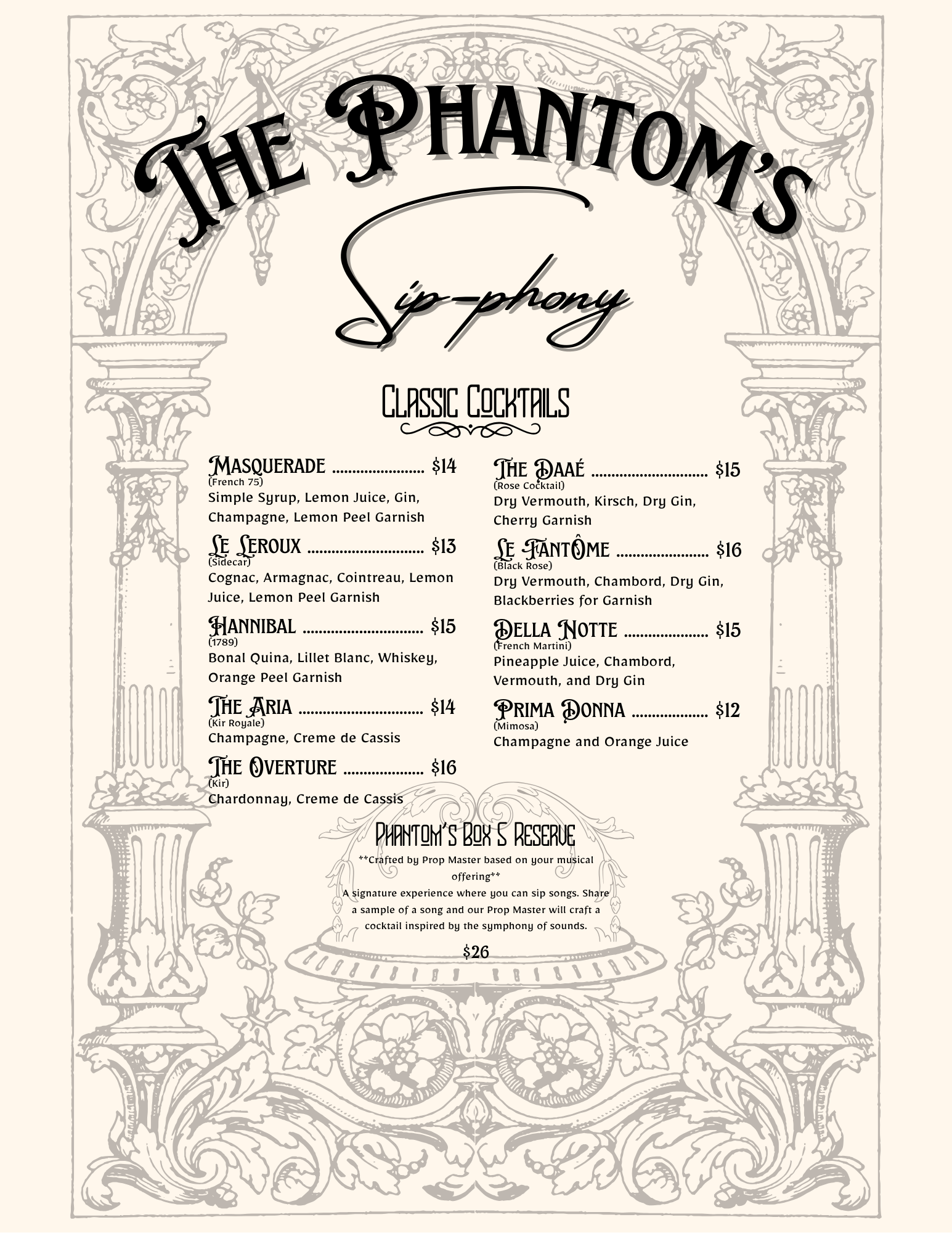
The fonts for the logo and menu were inspired by early 1900s playbills with heavy filigree and embellishments.
Additionally, the serving window was designed with a blue velvet curtain and wooden half-oval counter to denote the drinks are now taking center stage.
The menu items are based on classic French cocktails and are named based on characters within Phantom of the Opera, opera components, and the author of the novel. The language for some of the drinks is Italian as many classic operas are in Italian.
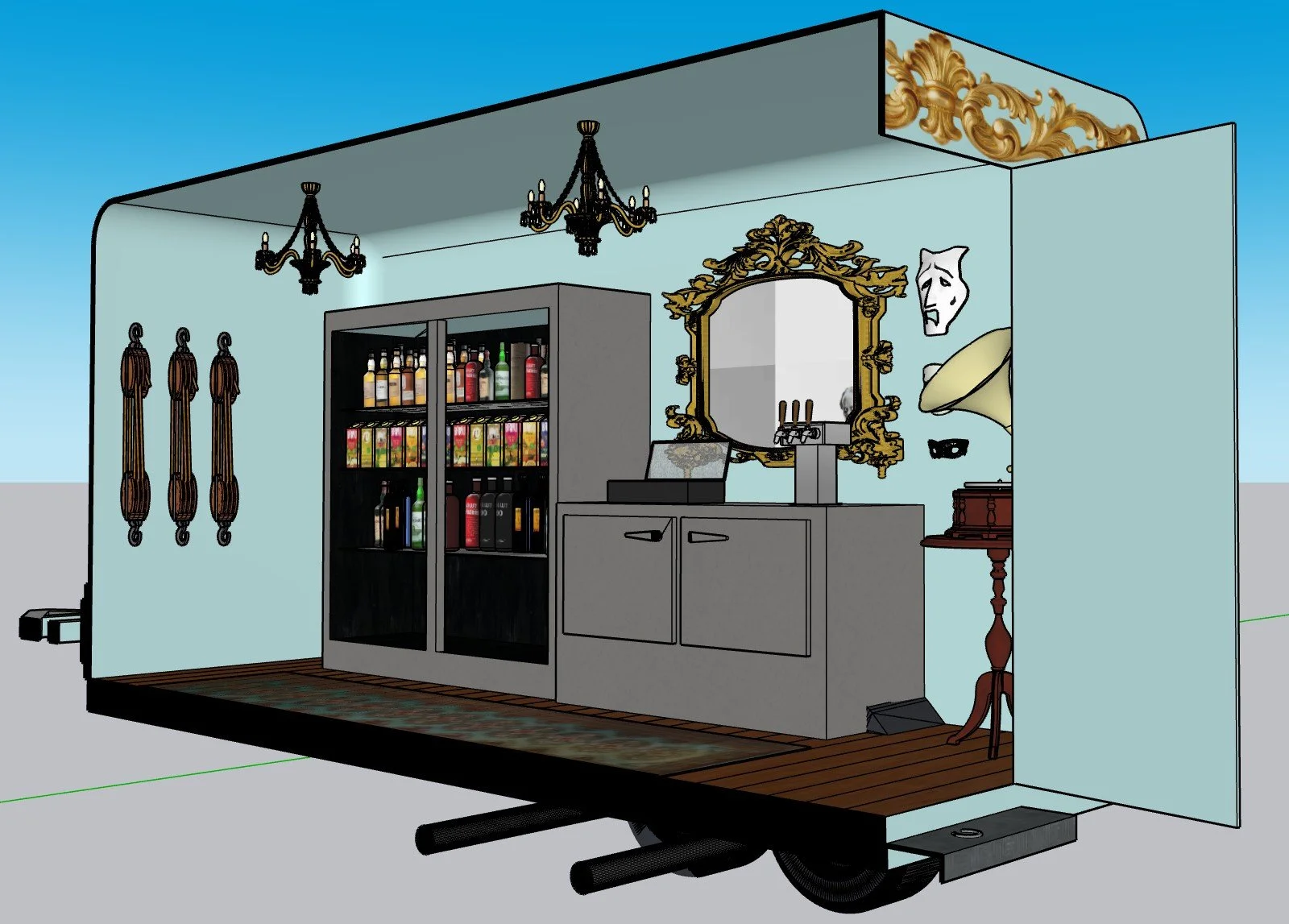
The interior of the trailer is designed to feel homey to the ‘barman’ drawing inspiration from backstage elements like rigging and other baroque elements like the chandeliers and mirror.
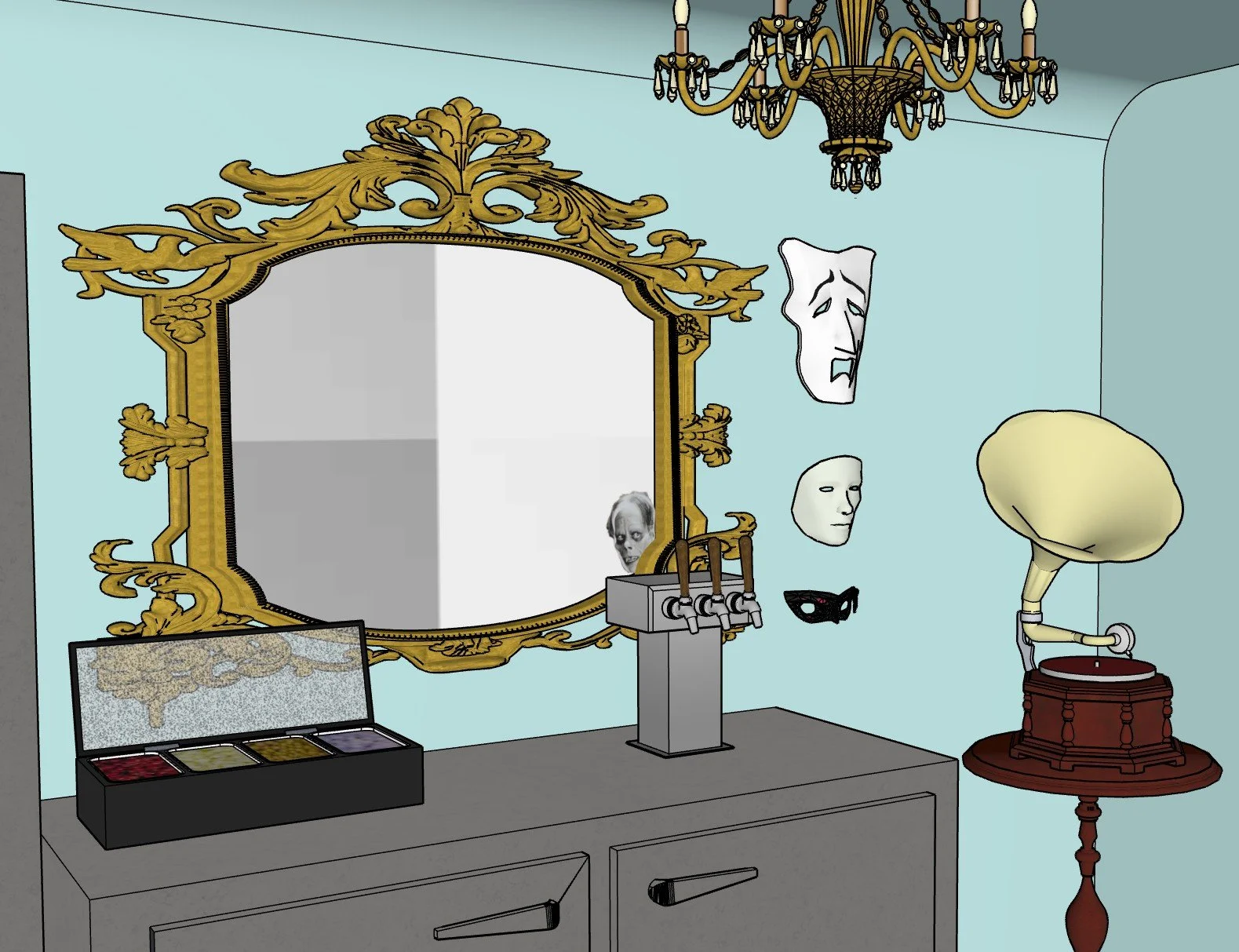
When the ‘barman’ left the Paris Opera House, it was a hard goodbye despite the trials he faced while there. Because of this he took a few mementos. Were those the masks of the Phantom? And who is that peering out from the corner of the mirror?
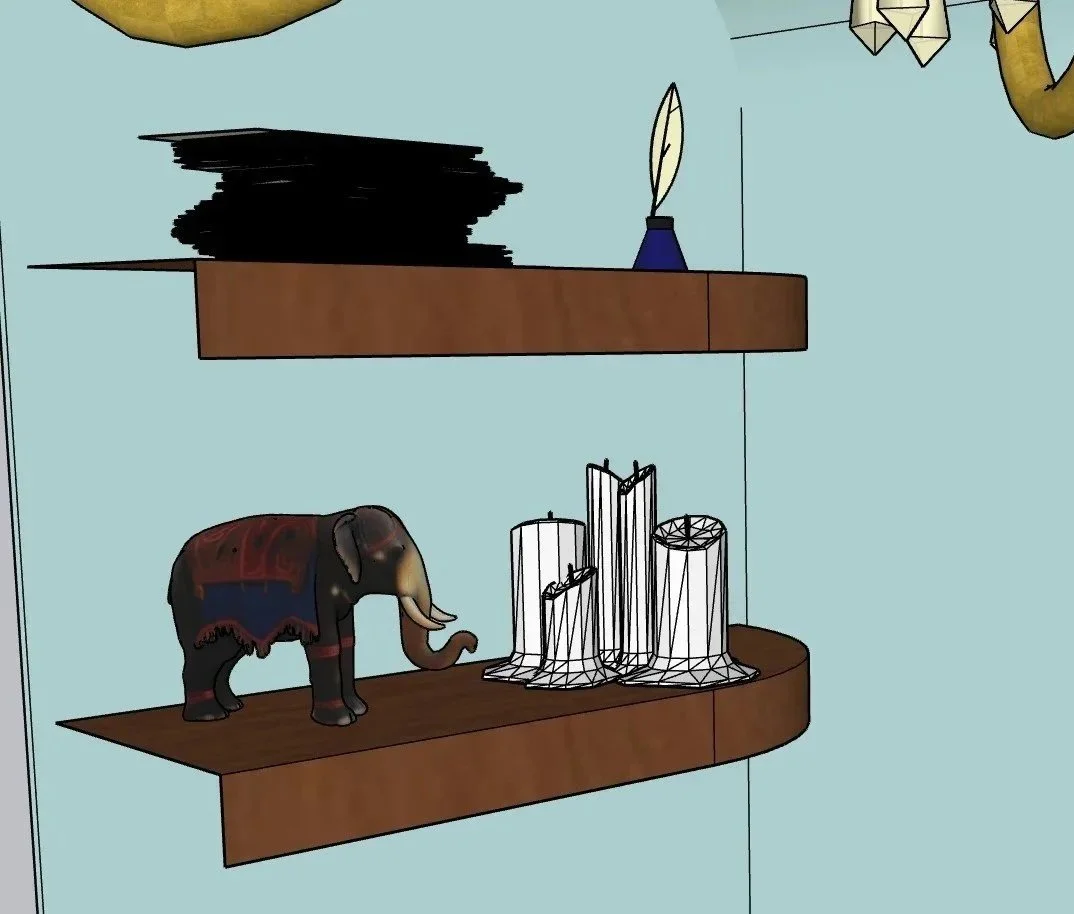
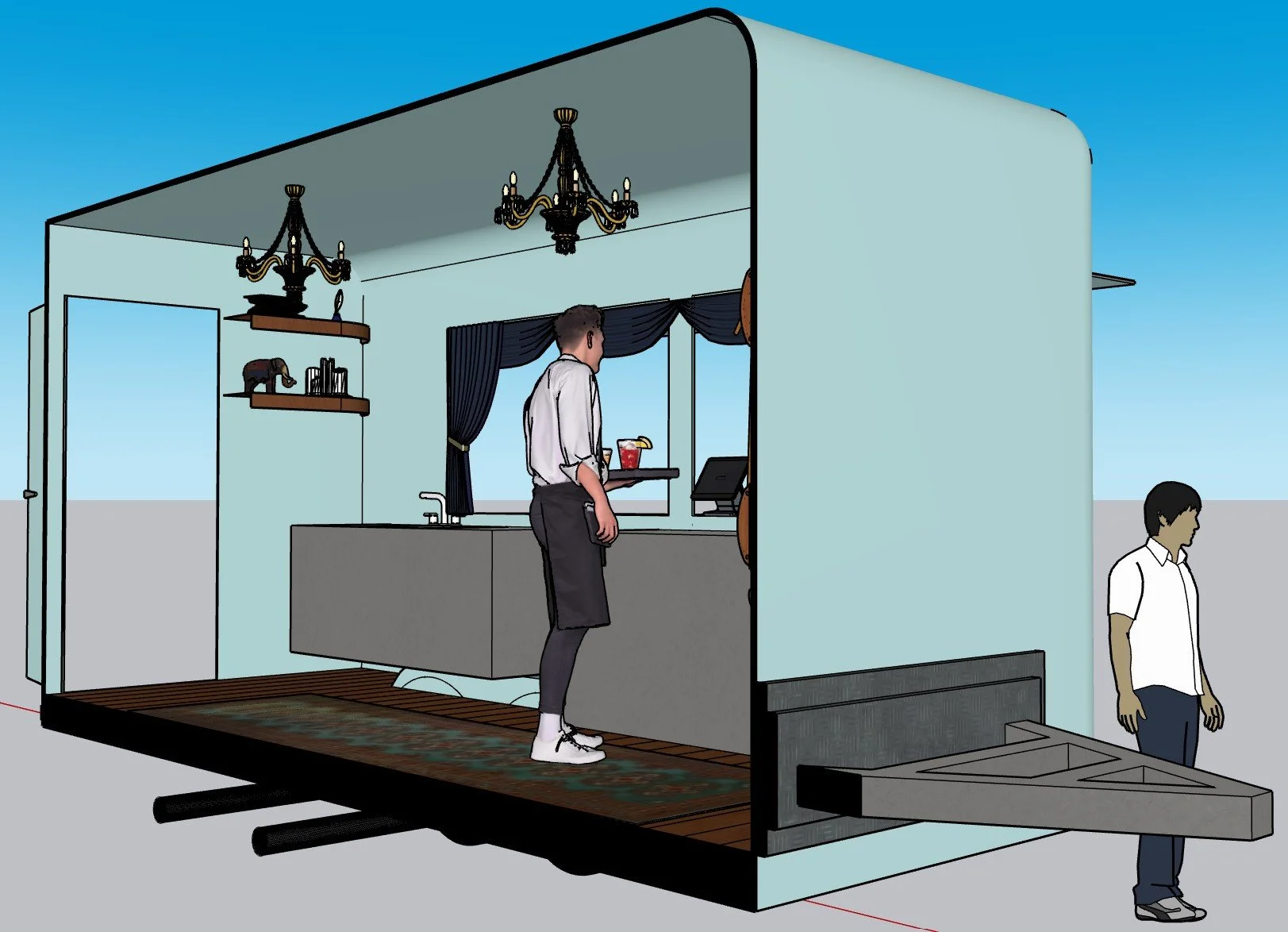
When guests see this trailer, they see the gilding and curtains and can expect a show to which the “barman” provides. Going to a bar is a production in and of itself, but when the “barman” has synesthesia, the show really begins.
In addition to the drink offerings nodding to the French origins of the Phantom of the Opera and the Paris Opera House the “barman” left, guests can purchase the experience of having their favorite song crafted into a cocktail before their very eyes. The “barman” has dubbed the experience the “Phantom’s Box 5 Reserve” so named for the viewing box saved for the Phantom every night. Not only did the former prop master craft cocktails for the performers after every show, but before the show each night, he would leave a cocktail in Box 5 for the Phantom based on the rehearsals of the show to try and keep the Phantom on his good side.
Guests need simply scan the provided QR code and submit a 30 second segment of any song to get a custom drink like the “barman” used to craft for the Phantom and his favorite performers. But be warned, these drinks are non-refundable and if the song is no good, the drink could follow suit. If that makes the guest nervous, there are offerings of classic French cocktails on the standard menu they can order instead
The projects below are examples of technical skills. All of the following products were designed from sketches to CAD, to production using SolidWorks. In addition to these final products, documentation was also created including part, drawing, and assembly files.
Undergraduate Projects
Measuring Wheel Project
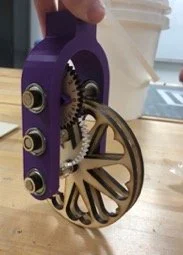
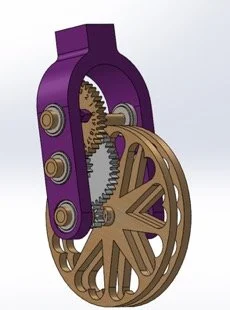
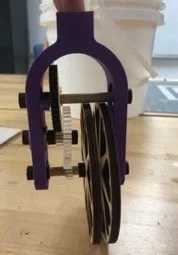
The purpose of this project was to come up with a gear assembly that could accurately measure 20'. The design had to stay within material and size constraints. This project required knowledge of gear ratios and tolerancing for threads and pressure fits.
CNC Box Project
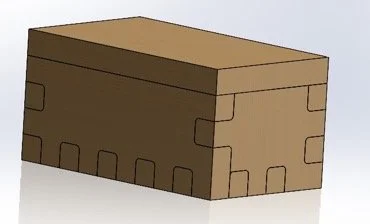
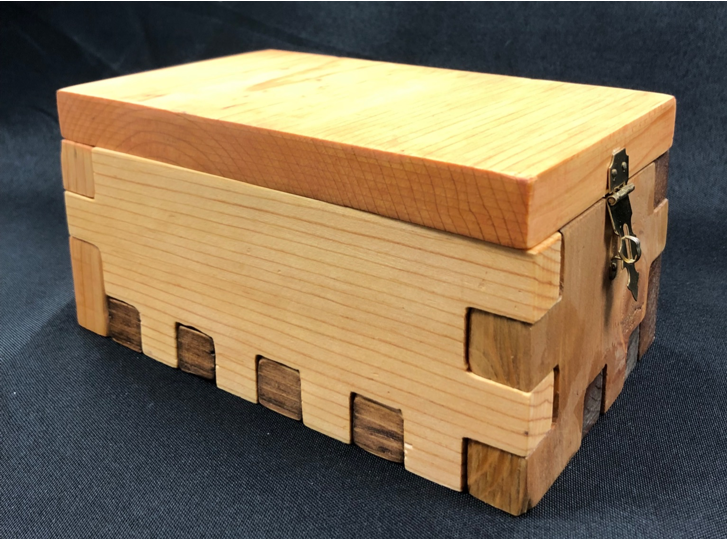
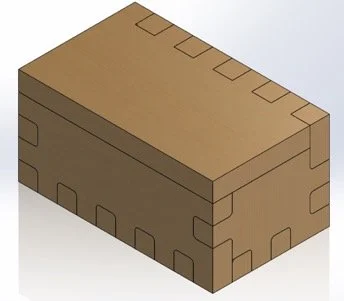
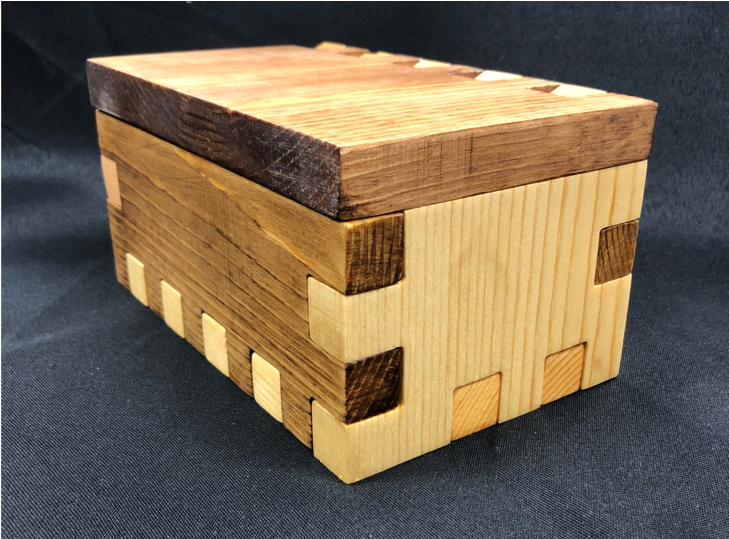
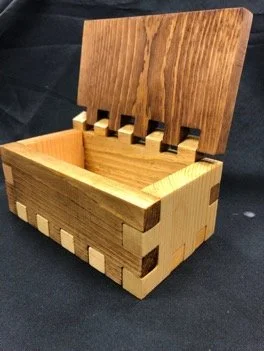
This project focused on dimensioning and tolerances. I challenged myself by creating a puzzle box where the rest of my classmates went for designs held together with glue. By the second iteration, I decided a hinge function for the lid was a more cohesive design. The entire box is friction fit and can be assembled and disassembled at will.
Gearbox Project
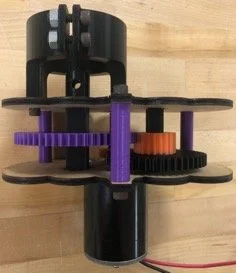
The goal for this project was to create a gear system capable of lifting 250lb 10in.
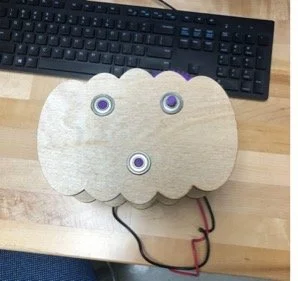
Because this project took place around Halloween, I decided to come up with a housing that matched the season.
1st Iteration

Final Design
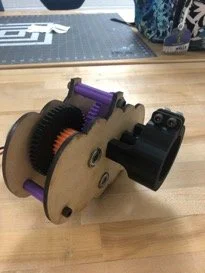
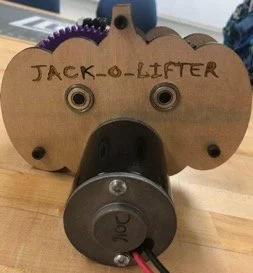
It is important to me that a product is not only functional, but also looks great. I want every project to challenge me and I want to deliver above and beyond what is expected.
Senior Project: Wooden Vehicle
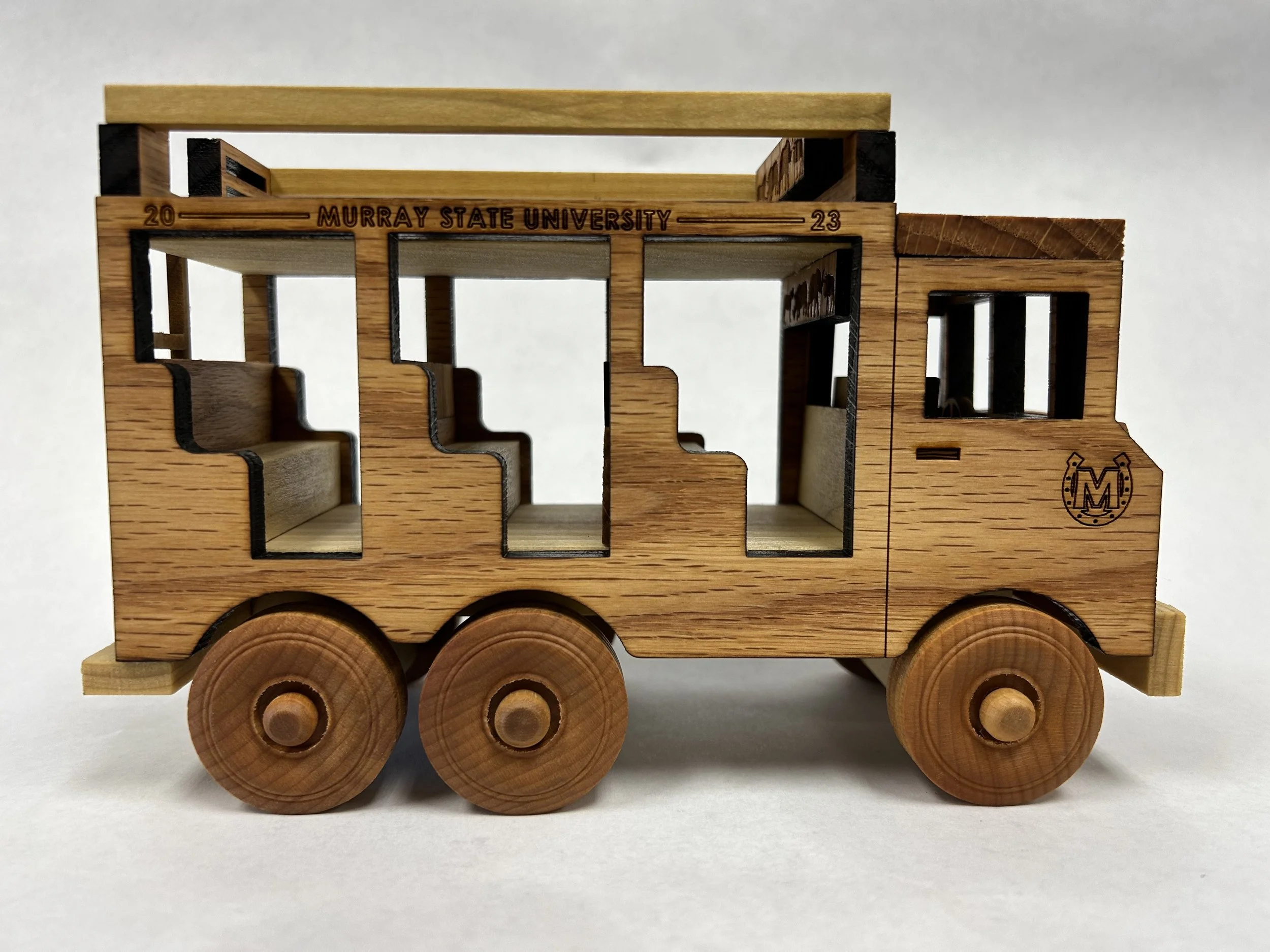
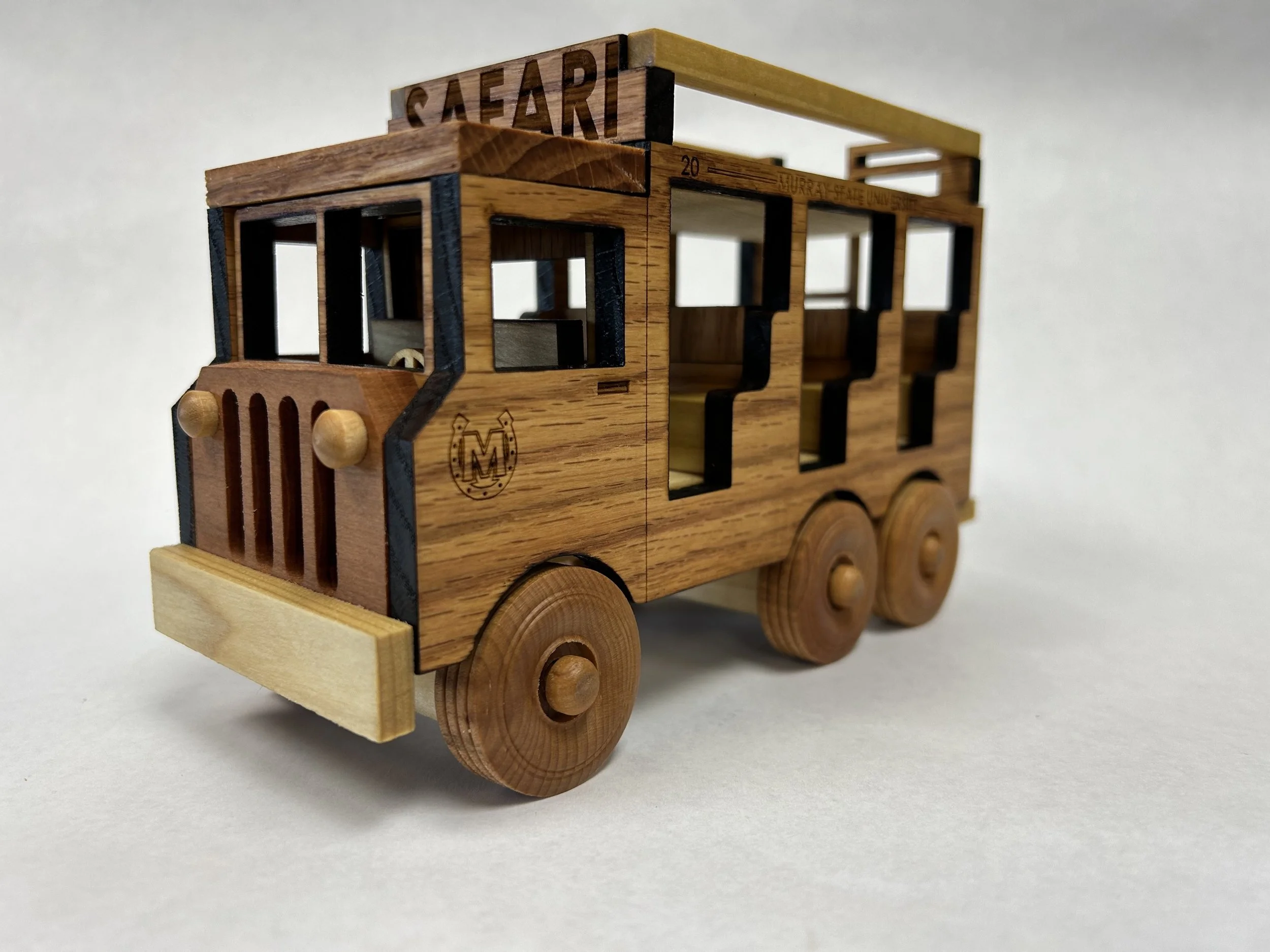
Every senior comes up with their own design to present and produce a toy that is original and desirable. We have to take into account cost per unit, materials available, wood grain orientation, standard material dimensions, production time, and manufacturability.
We also manufactured our designs and made edits through the rest of the semester to ensure our designs were the best they could be.
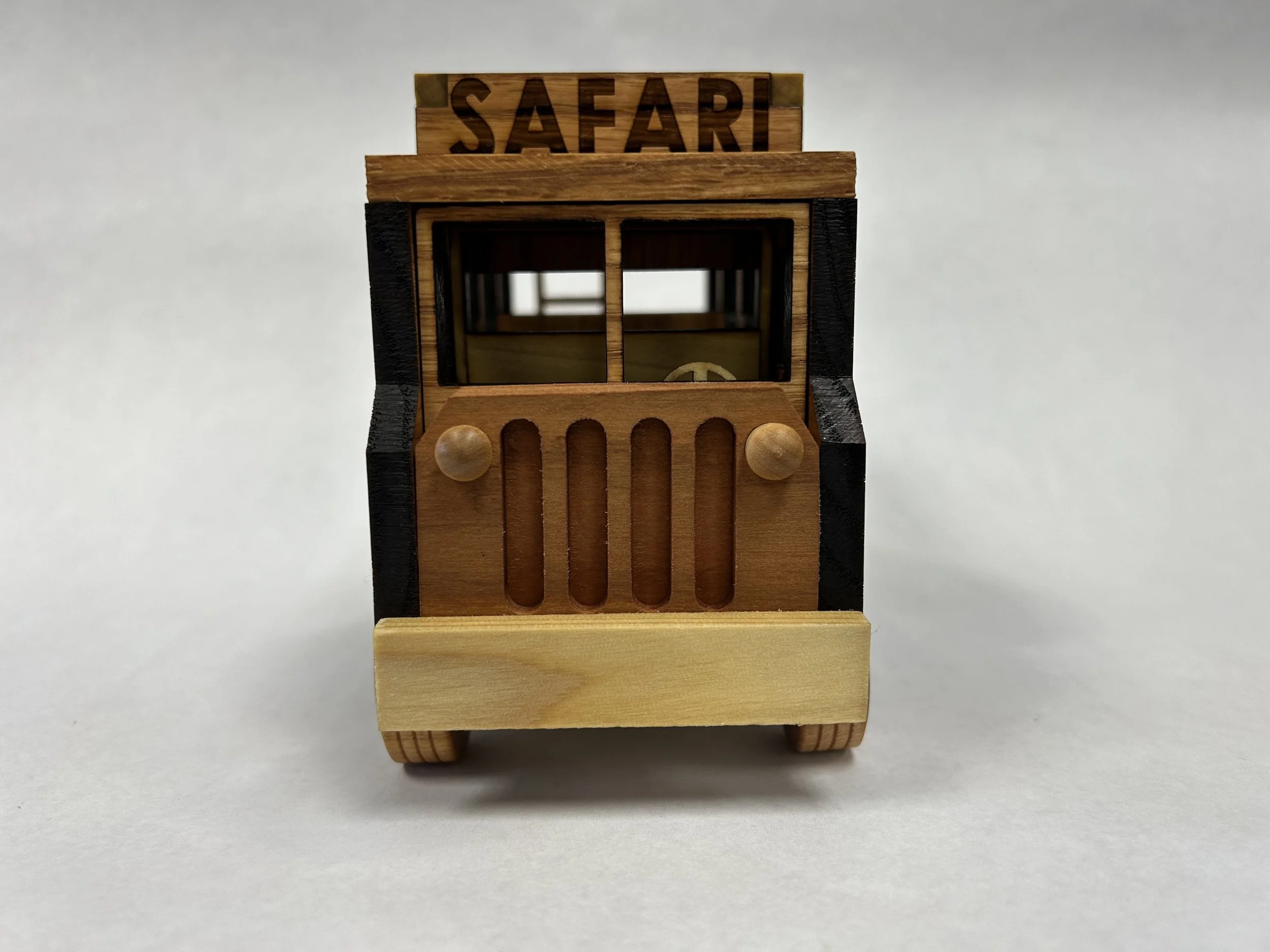
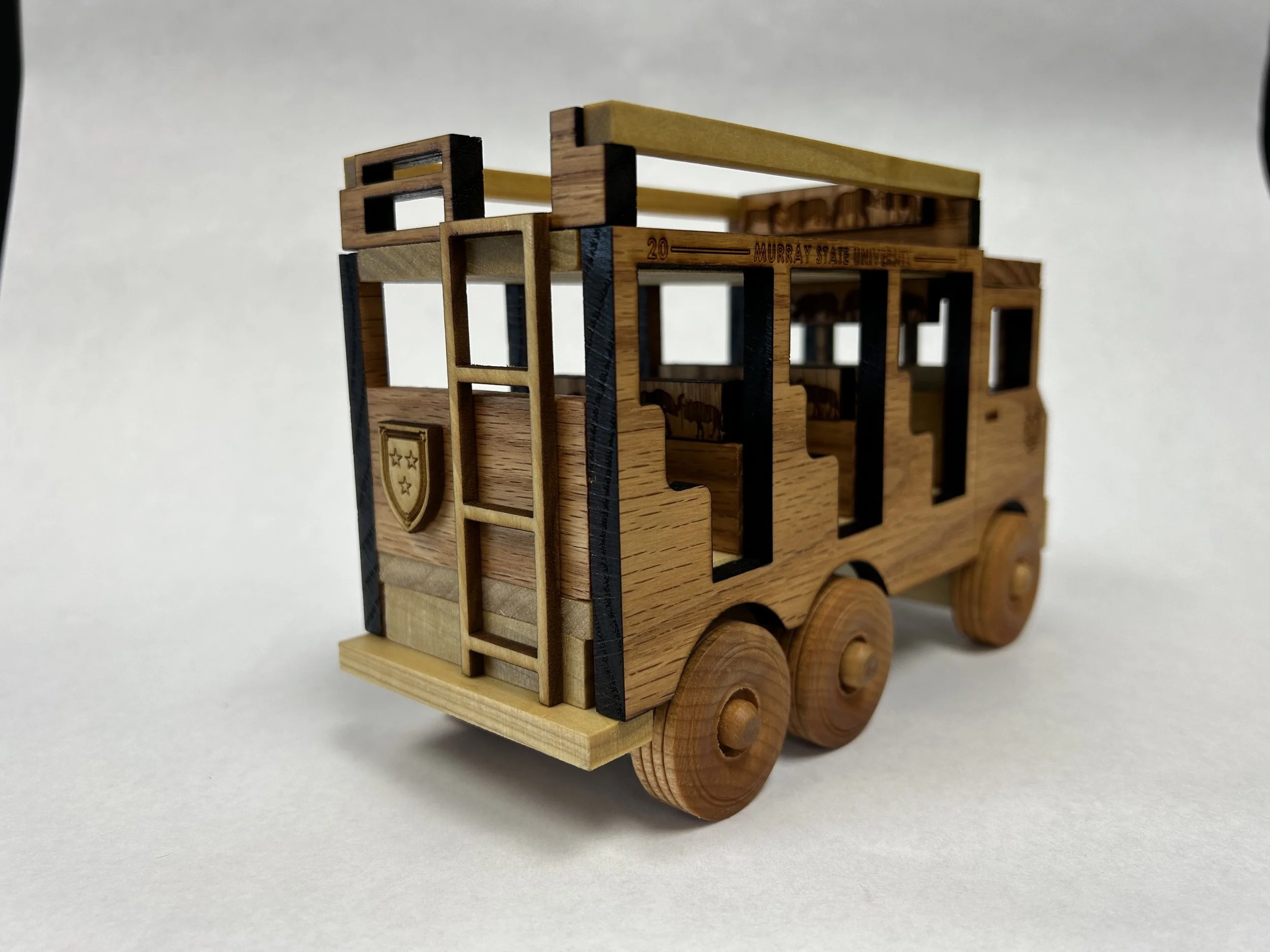
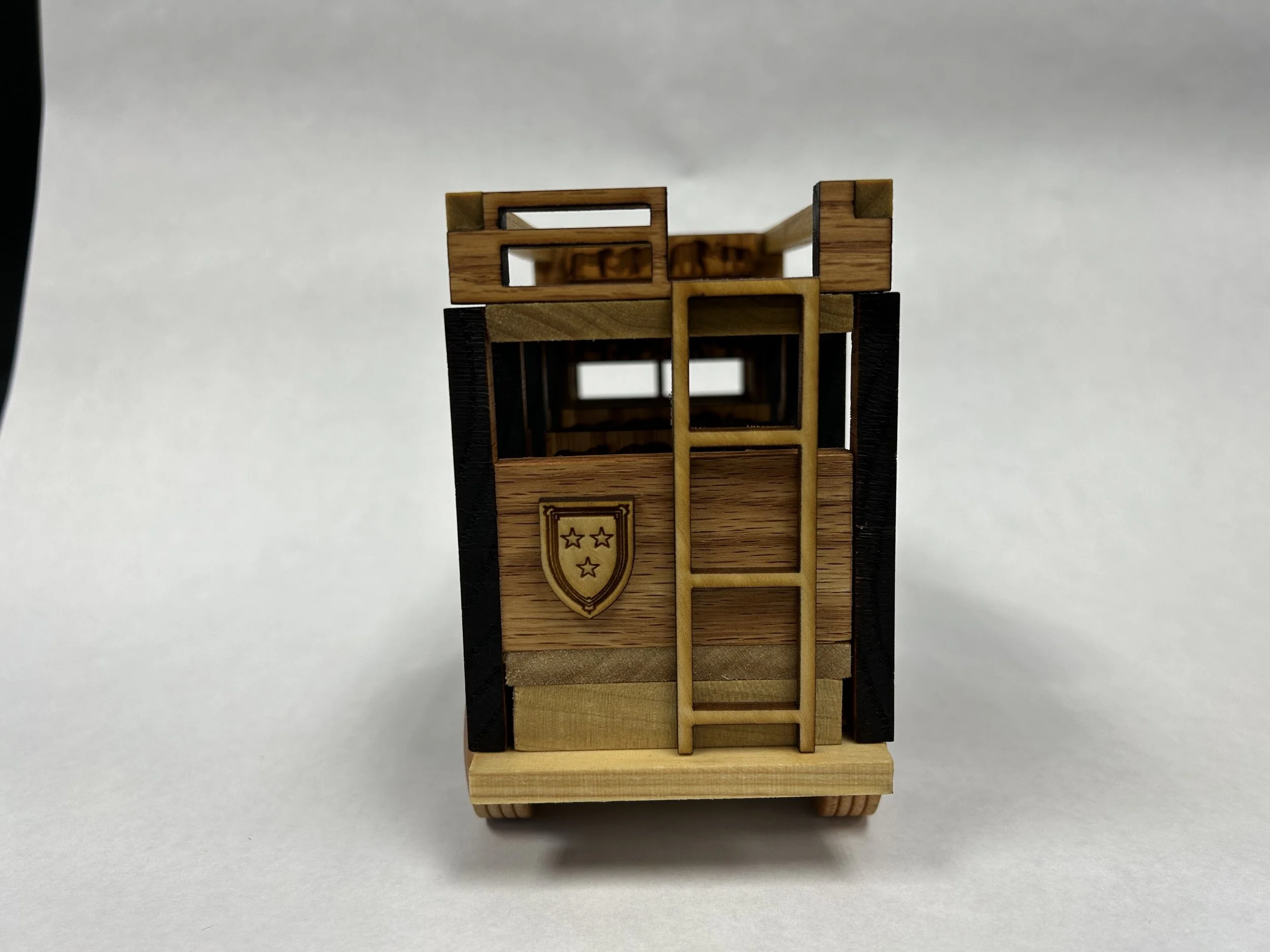
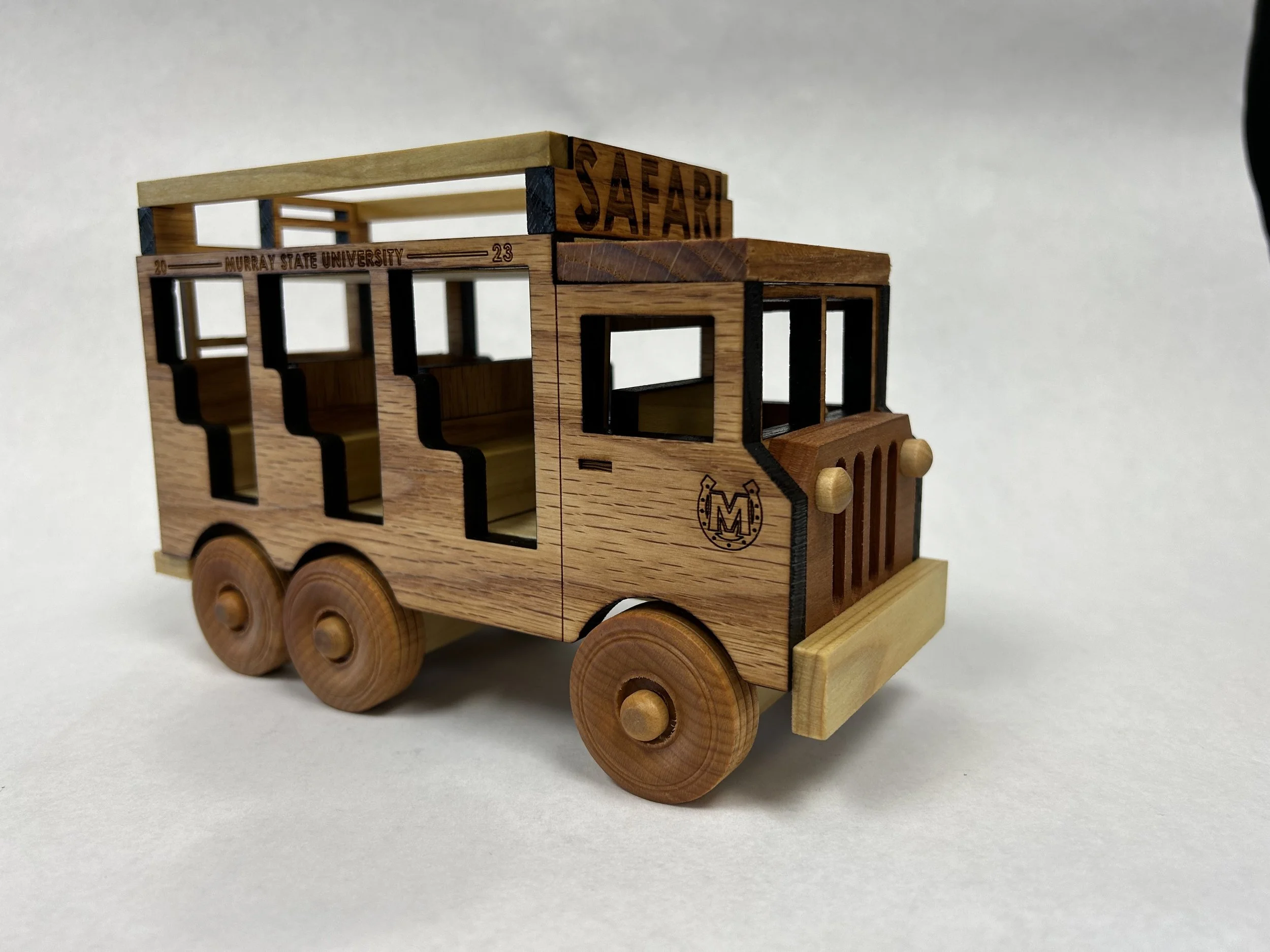
For my toy, I created a Safari Truck.
Preliminary Design:
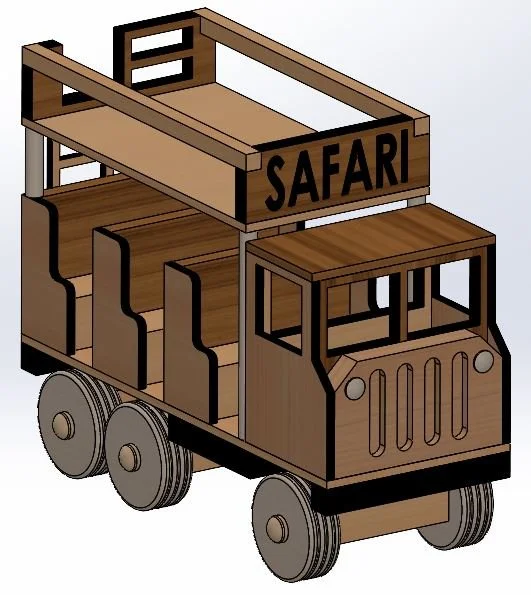
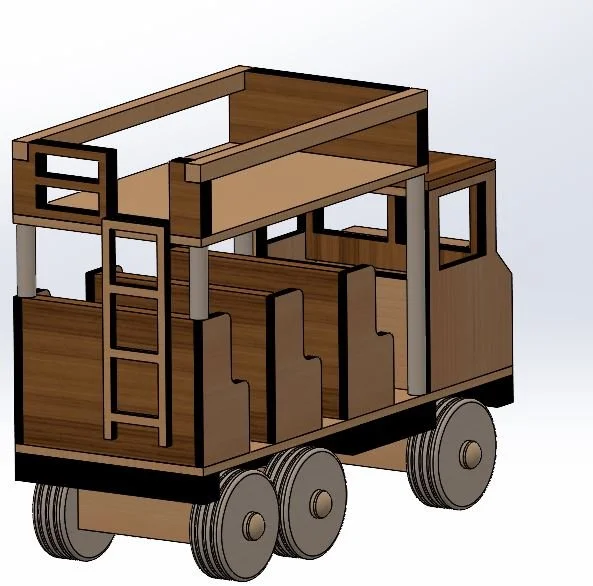
Preliminary Prototype after edits:

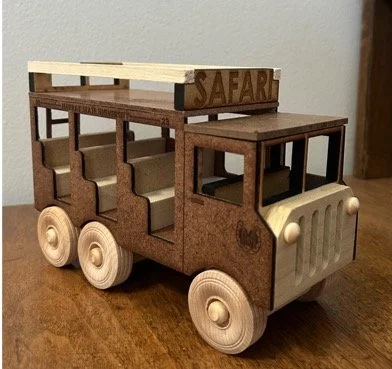
Post-Prototype changes:
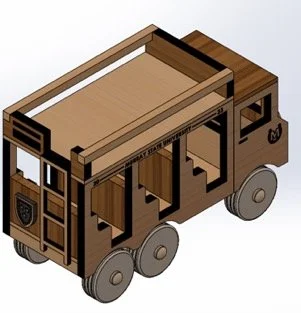
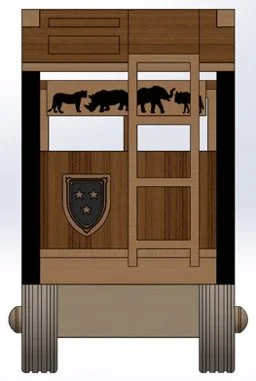
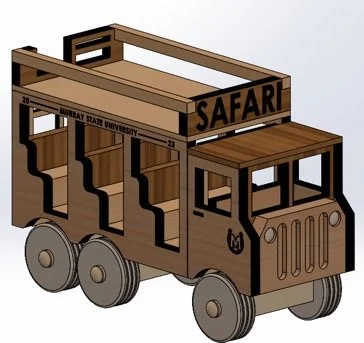
Final Design:
Thank you for viewing my portfolio! I enjoy what I do and am glad to share what I’ve done using Computer Aided Design thus far.